Unlocking the Spooky Charm of Lovely Haunting Font
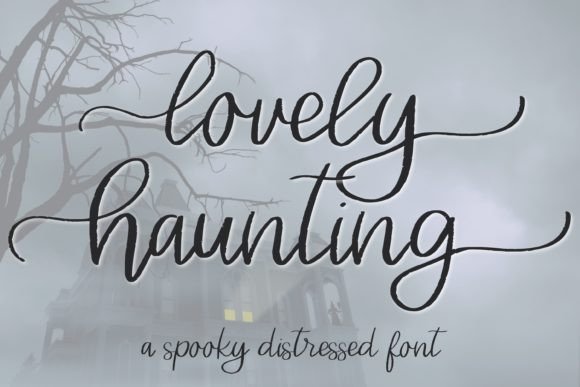
In a digital landscape saturated with generic sans-serifs and overly polished typefaces, finding a font that genuinely captures attention without sacrificing readability is a challenge. Lovely Haunting steps into this space not as a novelty, but as a sophisticated tool for designers and creators who need to convey a specific mood: one that balances elegance with an eerie, handcrafted aesthetic. This distressed brush script isn't just about looking scary; it's about adding texture, personality, and a human touch to projects that often feel too sterile.
Whether you are designing a Halloween invitation for a corporate gala or creating social media assets for a boutique brand, the right typography can shift the entire perception of your message. Lovely Haunting offers a unique solution by combining the fluidity of a brush stroke with a weathered, distressed finish. It feels authentic, like it was written in a single sitting on a foggy night, yet it maintains enough structure to remain legible across various mediums.
What Makes Lovely Haunting Stand Out?
At its core, Lovely Haunting is a distressed brush script font designed to evoke emotion through imperfection. Unlike clean vector scripts that look identical regardless of scale, this typeface embraces the rough edges and irregularities of real ink on paper. The "distressed" quality gives it depth, making it perfect for projects where you want the text to feel tactile and organic rather than digitally generated.
The font's most significant strength lies in its elegant contextual and stylistic ligatures. In traditional typesetting, ligatures are special character combinations (like "fi" or "fl") that connect letters to improve flow and prevent collisions. In Lovely Haunting, these ligatures are custom-designed to mimic the natural connection points of a brush pen. When you type a word, the font automatically selects the most aesthetically pleasing connection between characters, ensuring that the script looks cohesive and professionally handwritten rather than disjointed.
This attention to detail extends to the font's encoding. Lovely Haunting is PUA encoded, which stands for Private Use Area. This technical feature is a game-changer for usability. Instead of struggling to find specific glyphs or ligatures hidden behind complex keyboard shortcuts, the PUA encoding allows you to access every single variant with ease. You can insert specific swashes, alternate endings, or unique distress marks directly from your character map or design software palette, giving you granular control over the final look of your text.
Real-World Applications Across Industries
The versatility of Lovely Haunting extends far beyond the obvious seasonal uses. While it is undeniably perfect for Halloween invitations, greeting cards, and stickers, its utility spans professional and creative sectors where a distinct voice is required.
- Event Marketing: For adult audiences aged 20–50, event branding needs to strike a balance between fun and sophistication. A standard horror font might feel cheap, but Lovely Haunting adds a layer of class to haunted house events, vintage tea parties, or themed workshops. It signals that the organizer cares about aesthetics and details.
- Social Media Engagement: On platforms like Instagram and Pinterest, visual hierarchy is crucial. Using Lovely Haunting for headlines or quotes can break the monotony of standard captions. Its distressed texture catches the eye in a scrolling feed, increasing dwell time and engagement rates for lifestyle bloggers and influencers.
- Branding and Packaging: Small business owners and entrepreneurs often struggle to differentiate their products. Whether you are packaging artisanal soaps, crafting labels for craft beer, or designing merchandise for a creative agency, this font provides a memorable signature. It suggests a brand that values craftsmanship and has a story to tell.
- Educational and Creative Projects: Educators and hobbyists can use this font to make learning materials more engaging. Imagine a history lesson on Victorian literature or an art project on calligraphy. Lovely Haunting brings a historical or artistic weight to worksheets and presentations without requiring advanced graphic design skills.
Strategic Benefits for Designers and Creators
Choosing the right typeface is a strategic decision that impacts user experience and communication efficiency. Lovely Haunting offers several practical benefits that go beyond mere decoration.
First, consider usability and efficiency. Because the font is PUA encoded, the workflow for incorporating complex ligatures is streamlined. You do not need to manually adjust kerning or create workarounds to achieve a connected look. This saves valuable time for freelancers and agencies working under tight deadlines, allowing them to focus on layout and content strategy rather than fighting with font mechanics.
Secondly, there is the benefit of brand consistency and engagement. In a market where consumers are bombarded with polished, mass-produced imagery, a distressed script stands out because it feels human. It creates an emotional connection with the audience. When a user sees Lovely Haunting, they subconsciously register the effort and care put into the design. This perceived value can translate into higher trust and better conversion rates for commercial projects.
Furthermore, the font supports versatile communication. The elegant nature of the script ensures it doesn't veer into caricature. It can be used for serious, moody topics or lighthearted, festive ones. This adaptability means you don't need to purchase multiple fonts for different moods; one well-crafted typeface can handle a wide range of tonal requirements.
Practical Considerations for Implementation
While Lovely Haunting is a powerful asset, successful implementation requires thoughtful application. Like any display font, it works best when paired with simpler, neutral body text. Avoid using it for long paragraphs of reading material; its distressed texture can become fatiguing over extended periods. Instead, reserve it for headlines, pull quotes, logos, and short phrases where impact is key.
When selecting colors and backgrounds, keep the legibility factor in mind. The distressed elements add noise to the letterforms, so ensure high contrast between the text and the background. A white background with black text or a dark, muted background with cream-colored text will usually yield the best results. Additionally, test the font at various sizes. Some intricate ligatures may lose definition if scaled down too small for mobile screens or small print applications.
Finally, remember that Lovely Haunting is a tool for storytelling. Before applying it to a project, ask yourself what story you are trying to tell. Is it a story of mystery? Of nostalgia? Of handmade authenticity? If the answer aligns with the font's vibe, then it is the right choice. By understanding the nuances of its design—its PUA encoding, its contextual ligatures, and its distressed aesthetic—you can leverage it to create designs that are not only visually striking but also functionally effective.
In conclusion, whether you are a marketer looking to boost engagement, a designer seeking a unique signature style, or a business owner wanting to stand out, Lovely Haunting offers a compelling blend of beauty and functionality. It proves that even a font with a spooky name can bring elegance and efficiency to your professional toolkit.